
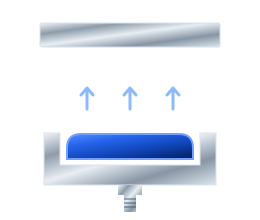
Axial
The profile moves perpendicular to the surface.
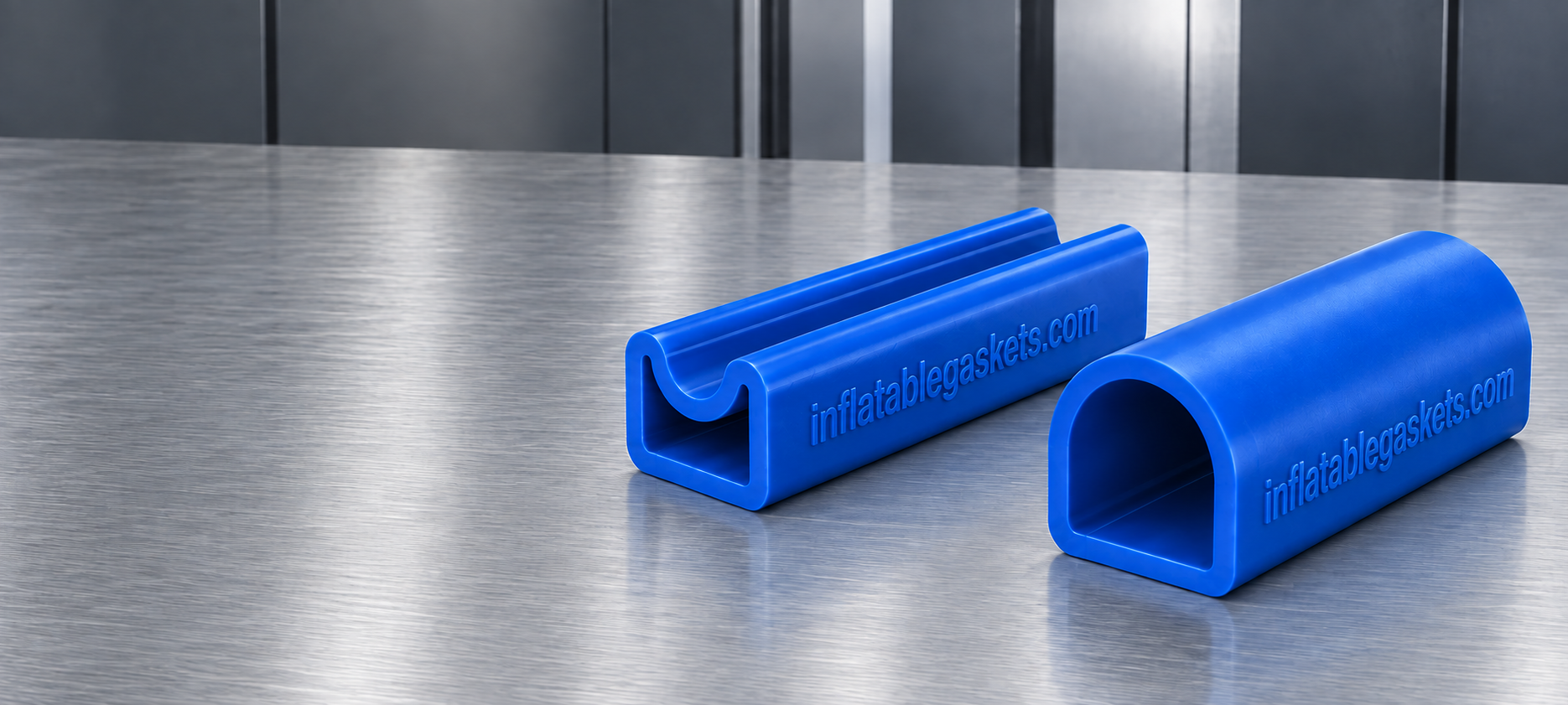
INFLATABLE SEALING SOLUTIONS
Activated by air.Sealed by contact.
Compressed air enters through the valve and expands the hollow silicone profile. The seal contacts the mating surface, then retracts when the air is released.
HOW DOES IT WORK?
A controlled cycle of inflation and deflation.
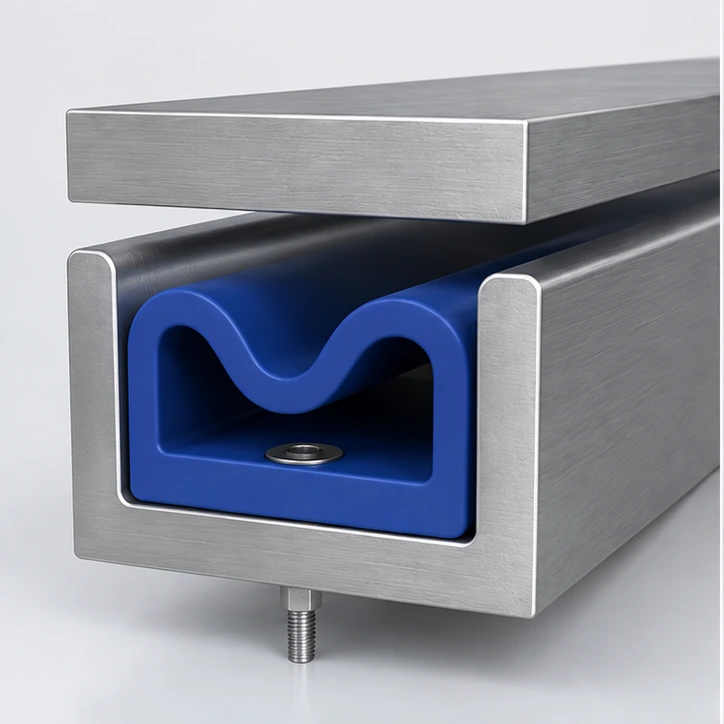
The seal rests deflated inside the channel.
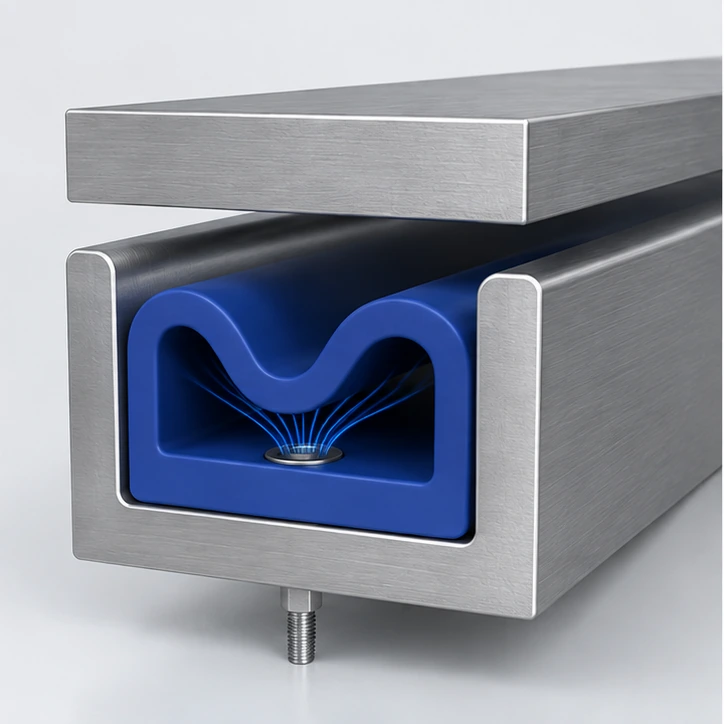
Compressed air is supplied to the profile.
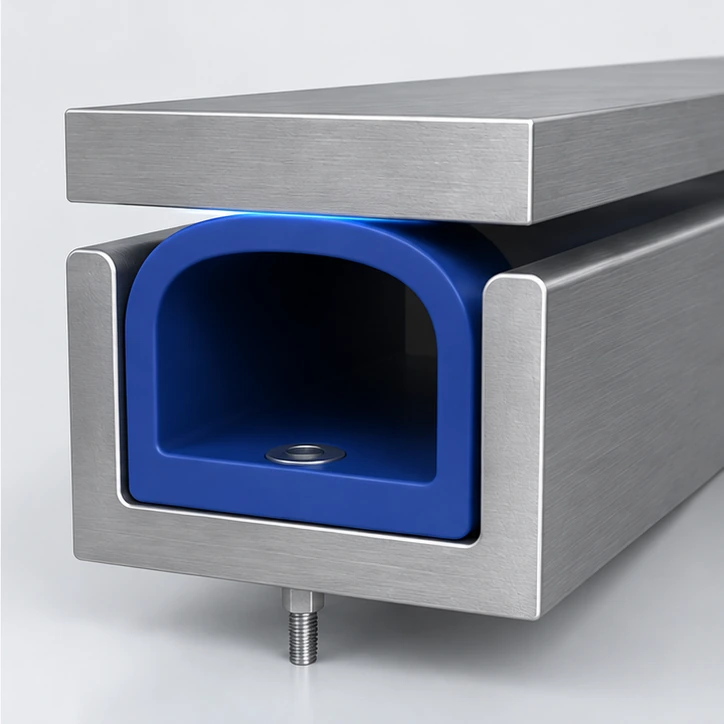
The expanding profile contacts the opposing surface.
The air is released and the profile retracts.
Schematic illustrationASSESS YOUR APPLICATION
Compare the deflated and inflated profile dimensions with the mounting channel and contact gap. Review the material, pressure and movement for your operating conditions.
DIRECTIONS OF MOVEMENT
The direction of movement depends on the profile and mounting arrangement.
The profile moves perpendicular to the surface.
The profile expands towards the centre.

The profile expands away from the centre.

Consider the contact direction, channel dimensions, operating gap and environmental conditions together. Compare deflated and inflated dimensions in the technical catalogue, and share your technical drawing with our team for advice.
Explore seal profilesOperating pressure depends on the selected profile, operating gap and application conditions. The same pressure does not apply to every profile. The profile's technical data must be assessed together with your application.
Get technical supportAir supplied to the hollow chamber causes the flexible profile to expand in the contact direction. Deflated dimensions help assess installation and movement clearance; inflated dimensions help assess the contact distance achievable during operation.
Share your technical drawing or an application photo with us.