
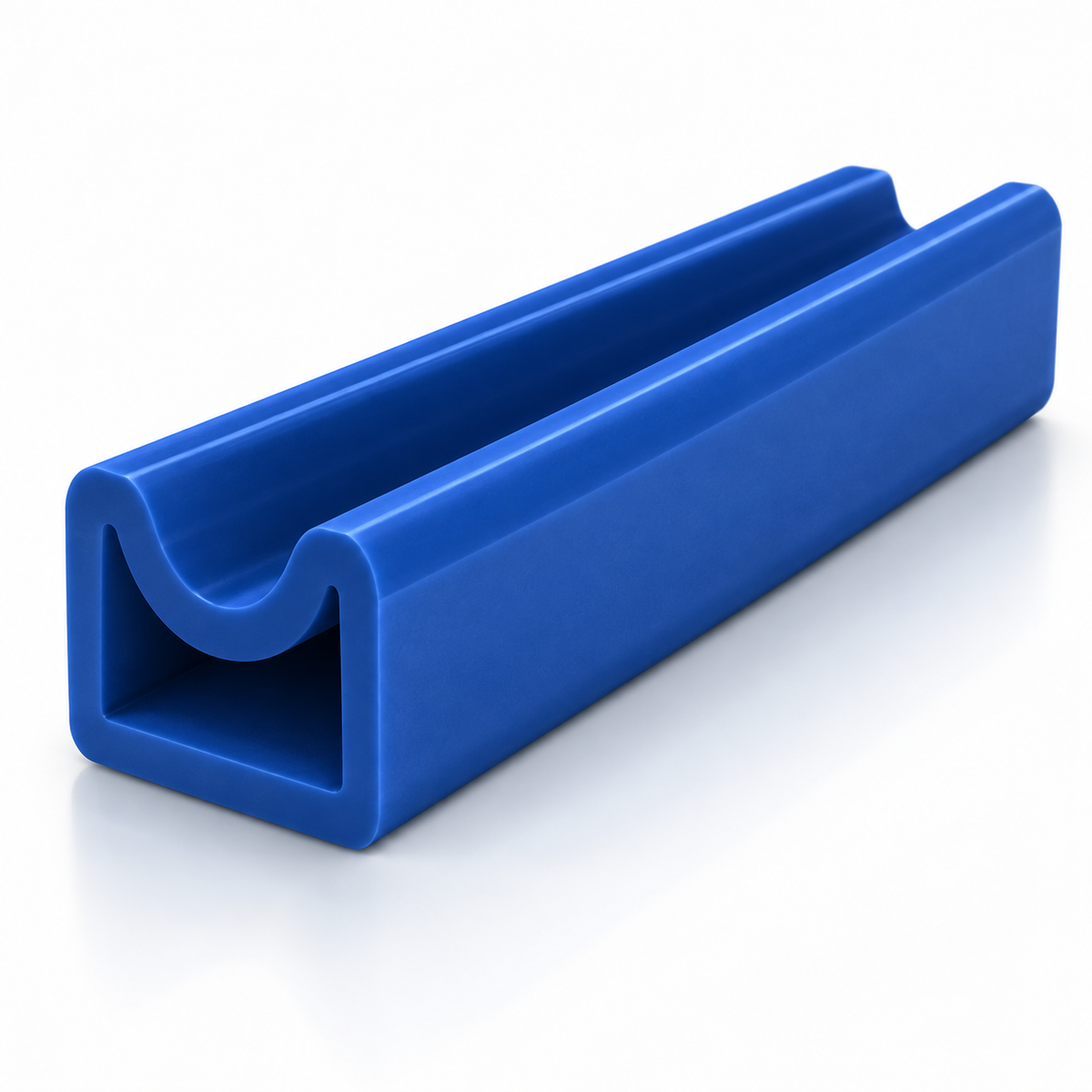
The main distinction of an inflatable seal is that sealing contact is created by air pressure. In a suitably designed system, this allows the closing and sealing steps to be controlled separately.
Controllable contact
The seal is inflated once the component reaches its operating position. Creating contact through pressure makes it easier to incorporate the sealing cycle into the machine's control sequence. Air pressure can be monitored with suitable equipment.
Retraction during movement
Releasing the air allows the seal to withdraw from the opposing surface. With suitable clearance, this can help reduce friction during opening and closing. Complete deflation must be confirmed before the component moves.
Accommodating the gap
The profile's expansion can bridge the operating gap within specified limits. This does not mean unlimited gap compensation: the profile cross-section and permitted travel must be checked together.
What information is needed before selection?
- Channel cross-section and gap to the opposing surface
- Axial, radially inward or radially outward contact direction
- Temperature, pressure differential and contact media
- Opening and closing frequency and available air connection
Explore how it works; let's assess the right cross-section for your application together.
Technical reference: Trelleborg — Airseal operating principle. Performance depends on the application, material and selected profile.