
Skip to the product

GLASS LAMINATION AND VACUUM PROCESSING

Silicone Vacuum Bags

Flexible, reusable bag solutions for glass lamination.

Explore the bag construction, internal interlocking closure and working-area dimensions for your production process.

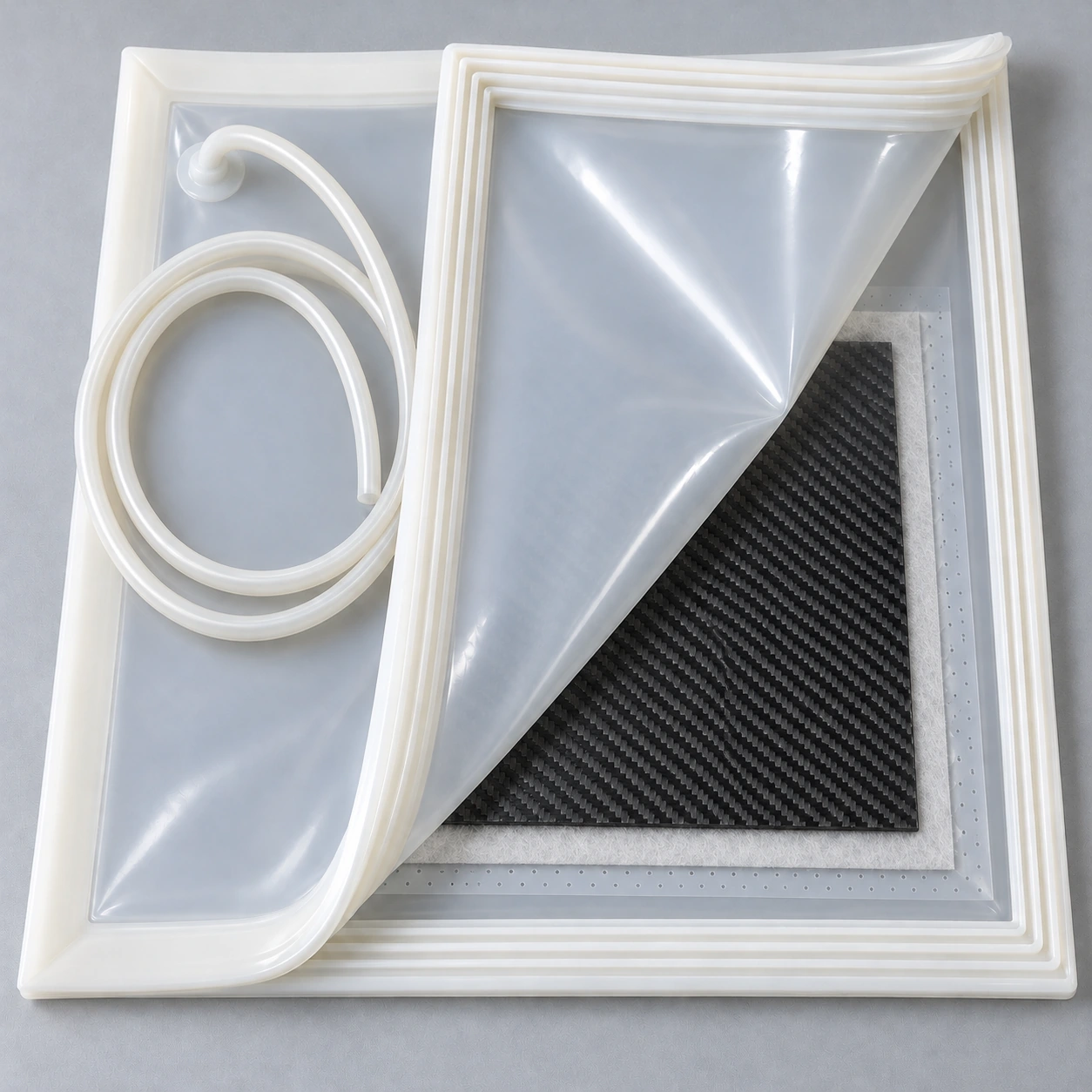
Open translucent silicone vacuum bag showing internal closure tracks and a silicone hose connected directly to the surface.
Product construction: flexible membrane, internal mating tracks and direct hose connection.
Open translucent silicone vacuum bag showing internal closure tracks and a silicone hose connected directly to the surface.
Product construction: flexible membrane, internal mating tracks and direct hose connection.

Silicone Vacuum Bags

What is a silicone vacuum bag?

A silicone vacuum bag is a flexible enclosure that creates a closed working volume around a part. The vacuum line draws air out of this volume. The resulting pressure difference brings the membrane towards the enclosed stack. In glass lamination, the bag helps evacuate air around the glass and interlayer assembly. With a suitable material and process, the bag can be prepared for further production cycles.

  • Glass lamination
  • Decorative laminated glass
  • Composite process assessment

Smooth outside, interlocking tracks inside

The illustrated model consists of two flexible silicone sheets. The outward-facing surface of the white perimeter profile is smooth; the interlocking tracks are on the opposing inner faces. The parallel lines visible along the opened edge belong to this mating closure. Alignment through the corners, clean tracks and complete perimeter engagement matter when maintaining vacuum.

Silicone hose connected directly to the surface

The flexible hose connects directly to a silicone mounting base on the bag surface. Hose diameter, length and outlet position are assessed against the vacuum system, workbench and oven arrangement. For heated processes, the membrane, hose and connection region must be assessed together, including exposure time.

GLASS LAMINATION AND VACUUM PROCESSING

Applications of silicone vacuum bags

The bag perimeter remains the same while the enclosed part and auxiliary materials change with the application. These illustrations explain the product and example arrangements.

Transparent glass assembly placed inside the silicone vacuum bag with the upper membrane partly open.
Glass application: the assembly sits inside the working area without touching the closure profile.

01 / Silicone Vacuum Bags

Silicone vacuum bags for glass lamination

Controlled air evacuation around the glass assembly.

Glass sheets and the chosen lamination interlayer are placed within the usable area. Once the bag is closed, air is evacuated through the vacuum connection. For EVA or other interlayers, the vacuum sequence and heating cycle follow the interlayer supplier’s process instructions. The bag is one component of the production arrangement: bonding and finished-glass quality also depend on the interlayer, preparation and thermal cycle.

Positioning the glass stack

Measure the glass width, length and total stack height. Allow perimeter clearance for the closure band and air passage. Prevent sharp corners from loading the membrane, the hose from being trapped under the glass and the evacuation path from closing. Connection number and position are assessed so the vacuum reaches the assembly.

Brown open-weave PTFE-coated air evacuation mesh over the glass inside the silicone vacuum bag.
The brown component represents PTFE-coated glass-fibre mesh between the outside glass surface and the bag.

02 / Silicone Vacuum Bags

What does PTFE-coated breather mesh do?

An auxiliary material that provides an air path between glass and bag.

PTFE-coated glass-fibre mesh uses its open structure to support air movement from around the glass towards the vacuum outlet. Appropriate placement can also help reduce direct bag contact with glass edges. This mesh is not a bonding interlayer. It is not placed between glass bonding faces as an adhesive or decorative lamination layer.

Assess the mesh and bag together

Mesh cleanliness, size and positioning affect the evacuation path. Check for wrinkles, thick overlaps and blocked routes to the outlet. Assess the mesh and edge protection against surface marking, process temperature and bag operating conditions.

Representative carbon-fibre part and auxiliary consumables inside the silicone vacuum bag.
Composite application example. The auxiliary layers shown are not an approved process recipe or specified layup sequence.

03 / Silicone Vacuum Bags

Assessment for carbon-fibre and composite processing

A vacuum bag selected alongside the part geometry and resin system.

Reusable silicone vacuum bags can also be assessed for suitable composite processes. Vacuum helps compact a layup and evacuate air. Flat panels, shaped tools and parts with different heights do not necessarily require the same bag geometry. Compatibility between the carbon fibre, resin, release materials and silicone bag is established for the application.

Process-specific consumables

Release film, peel ply and breather materials perform different functions. Their selection and sequence depend on the manufacturing method. Resin infusion, prepreg and wet layup do not share a single universal stack. Resin contact, cure temperature and part shape must be reviewed before confirming suitability of this bag for a composite process.

GLASS LAMINATION AND VACUUM PROCESSING

How does a silicone vacuum bag work?

Air is drawn out of the enclosure. Each stage of the production cycle is arranged around the bag, part and process conditions.

  1. Prepare the part

    Clean the work surface and mating tracks. Place the glass or part inside the usable area. Prepare the required breather and release materials to suit the defined process.

  2. Engage the inner tracks

    Align the mating tracks around the full perimeter, including corners. Keep dust, mesh, folded film and part edges out of the closure. Check that the hose is not pinched.

  3. Check the vacuum

    Evacuate the bag and perform the defined leak check. Once vacuum stability is confirmed, proceed with the approved heating cycle if required. Monitor vacuum and temperature throughout processing.

  4. Cool and prepare for reuse

    Complete the process-specific cooling and pressure equalisation steps before opening. Remove the part, then inspect the membrane, corners and hose base before the next cycle.

Benefits of a bag selected for the process

Repeated use

A suitable material and maintenance routine allow the same bag to be used over further cycles. Service life depends on thermal exposure, contact conditions and mechanical handling.

Visible positioning

A transparent or translucent membrane makes it easier to visually check the part and auxiliary material positions inside the bag.

Application-specific sizing

Working area, perimeter allowance and hose outlet are planned together against the existing workbench and production arrangement.

GLASS LAMINATION AND VACUUM PROCESSING

Selecting a custom-size silicone vacuum bag

Overall width and length alone are not enough to assess an order. Part size, closure clearance and operating conditions are considered together. A drawing or photograph of the existing bag helps clarify the arrangement.

Selecting a custom-size silicone vacuum bag
Information to shareWhy it matters
Usable internal width × lengthDefines the clear area for the part, auxiliary materials and air path; it differs from overall dimensions.
Part or glass-stack heightUsed to assess whether the membrane covers the assembly without loading the closure.
Oven and workbench arrangementDetermines overall clearance, handling layout, shelf spacing and hose routing.
Peak temperature and dwell timeSupports material assessment for the silicone membrane, hose and connection region in the same cycle.
Vacuum conditions and connectionsTarget vacuum, pump arrangement, hose diameter and connection number are assessed together.
Interlayer, resin and cleaning methodRequired for contact and chemical compatibility assessment.
Cycle frequency and existing issuesClarifies reuse expectations, leak locations and the maintenance routine.

Vacuum leaks, cleaning and service life

If vacuum cannot be maintained, inspect the closure for contamination or incomplete engagement, corner folds, pinched hoses and membrane cuts. The connection line and pump arrangement also form part of the assessment. Bubbles or bonding defects in glass do not alone establish a bag fault: interlayer storage, surface preparation and the heating cycle also need consideration.

Prepare the bag after each cycle using a cleaning method compatible with its surface. Remove residue from the tracks without scraping them with sharp tools. Store the bag away from cutting surfaces without crushing the profile. Assess visible damage and recurring leaks before further production.

Frequently asked questions about silicone vacuum bags

Is a silicone vacuum bag the same as single-use bagging film?

No. The product shown has two silicone sheets and an internal perimeter closure that can be opened and closed again. Disposable bagging film is a different consumable with a different sealing arrangement.

Are there closure tracks on the outside surface?

The illustrated model has a smooth outside surface. The parallel mating tracks are on the opposing inner sheet faces and become visible when the bag is opened.

Are overall dimensions and usable area the same?

No. Overall dimensions include the perimeter profile and closing allowance. Measure the clear internal area available for the glass or part separately.

Can one bag be used with every glass lamination interlayer?

Suitability depends on the interlayer, temperature, exposure time and contact conditions. Share the supplier’s process data for the intended EVA or other interlayer.

Does the brown mesh go between the glass sheets?

The PTFE-coated breather mesh shown is positioned between the outside glass surface and the silicone bag. It does not replace the bonding interlayer.

What temperature can a silicone vacuum bag withstand?

There is no single temperature value for every silicone bag. Material, hose, connection region and time at temperature are assessed together; suitable operating values are established for the application.

What information is needed for a quotation?

Share usable width and length, stack height, oven layout, peak temperature and dwell time, vacuum arrangement, interlayer or resin, and a drawing or photograph of the existing bag.

Images are representative product and application designs. Final dimensions, material, connections and operating values are established through application review.

Scroll to Top