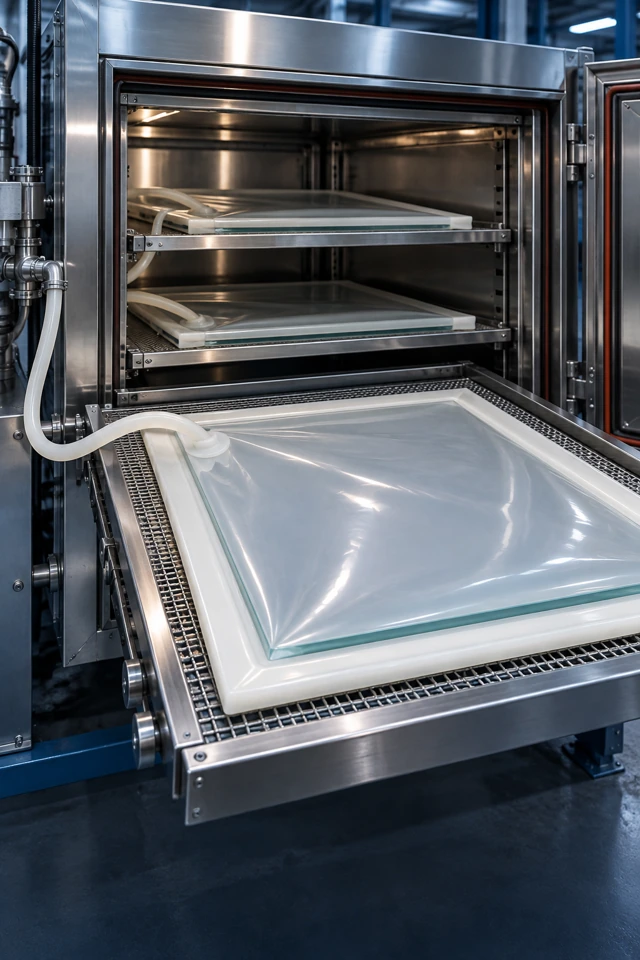
Inflatable Seals for Industrial Oven & Dryer Doors
Explore perimeter sealing for process ovens and drying cabinets. Selection considers the actual temperature at the seal and thermal expansion alongside the temperature inside the oven.
Explore sealing options for oven and process cabinet doors based on the temperature at the seal and the mounting conditions.
Process ovens
Drying cabinets
Heat treatment doors
Key factors in profile selection
Actual temperature at the seal
Thermal expansion and contact distance
Insulation, groove and air connection
APPLICATION DETAILS
Equipment and sealing applications
Explore the equipment, the joint where the seal works and manufacturing options for your application.
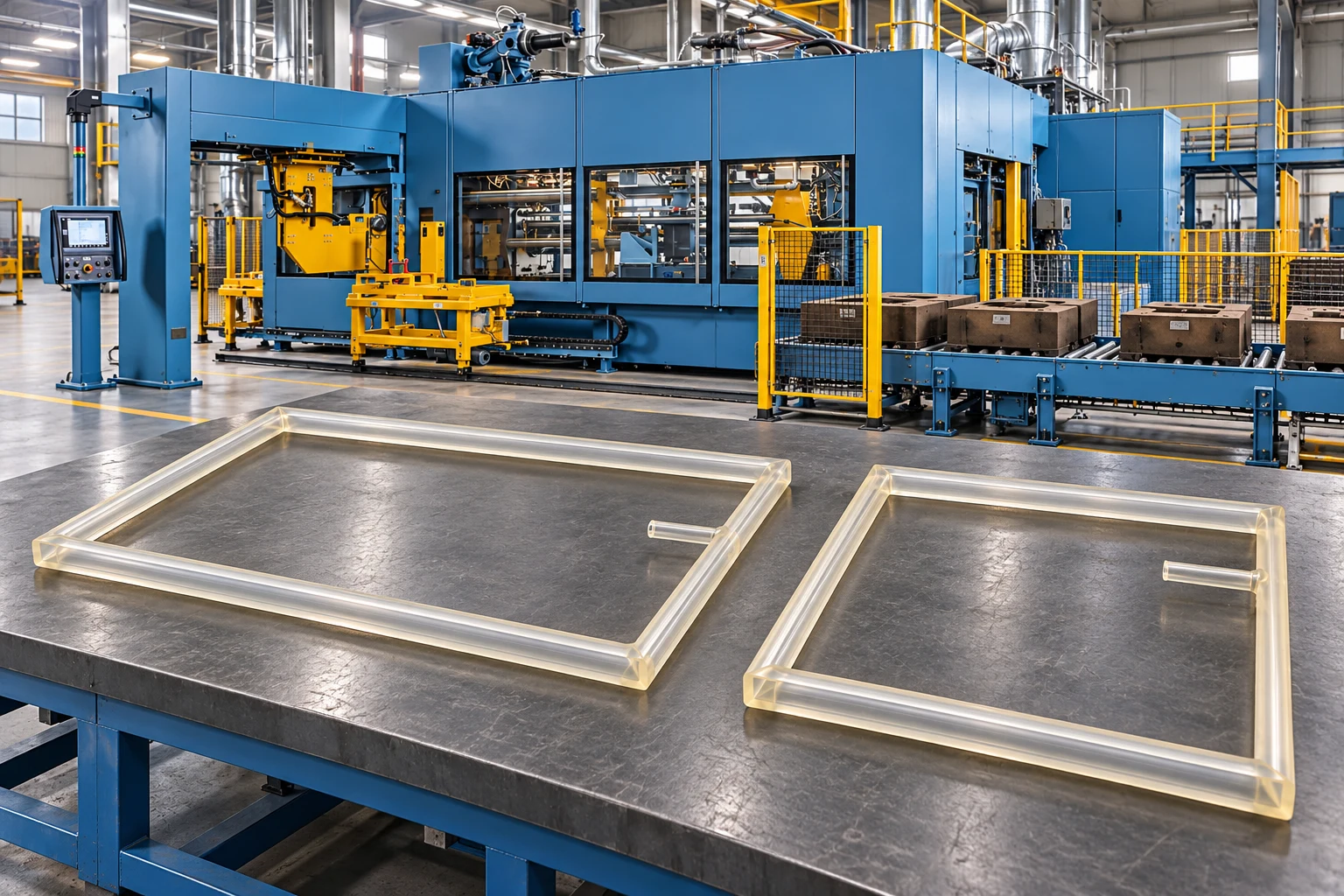
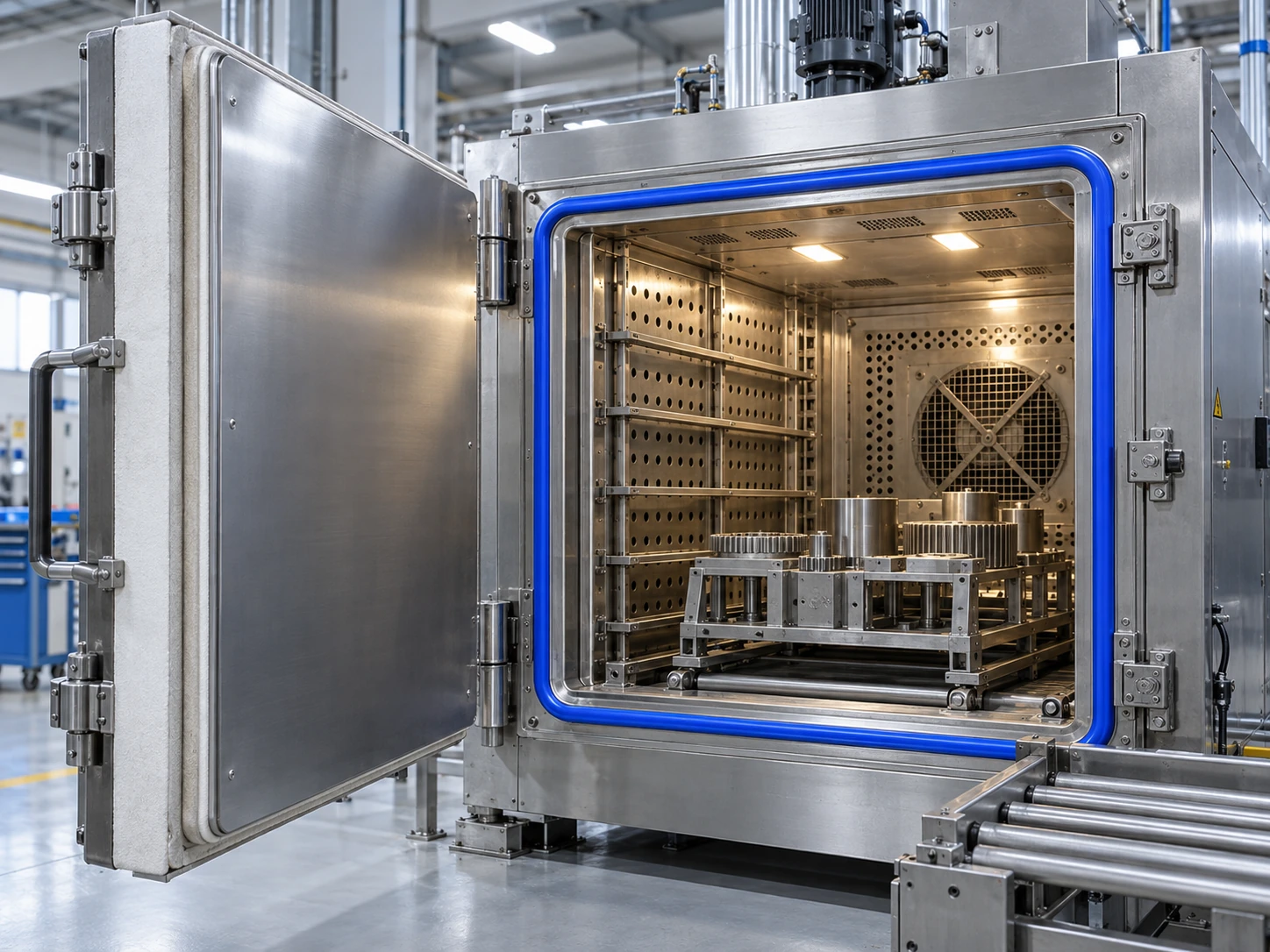
Enlarge image ↗Seal location: Perimeter channel between the insulated door and fixed frame
01 / EQUIPMENT AND PURPOSE
Process ovens and drying cabinets
Controlled contact at the door joint of a thermal process chamber.
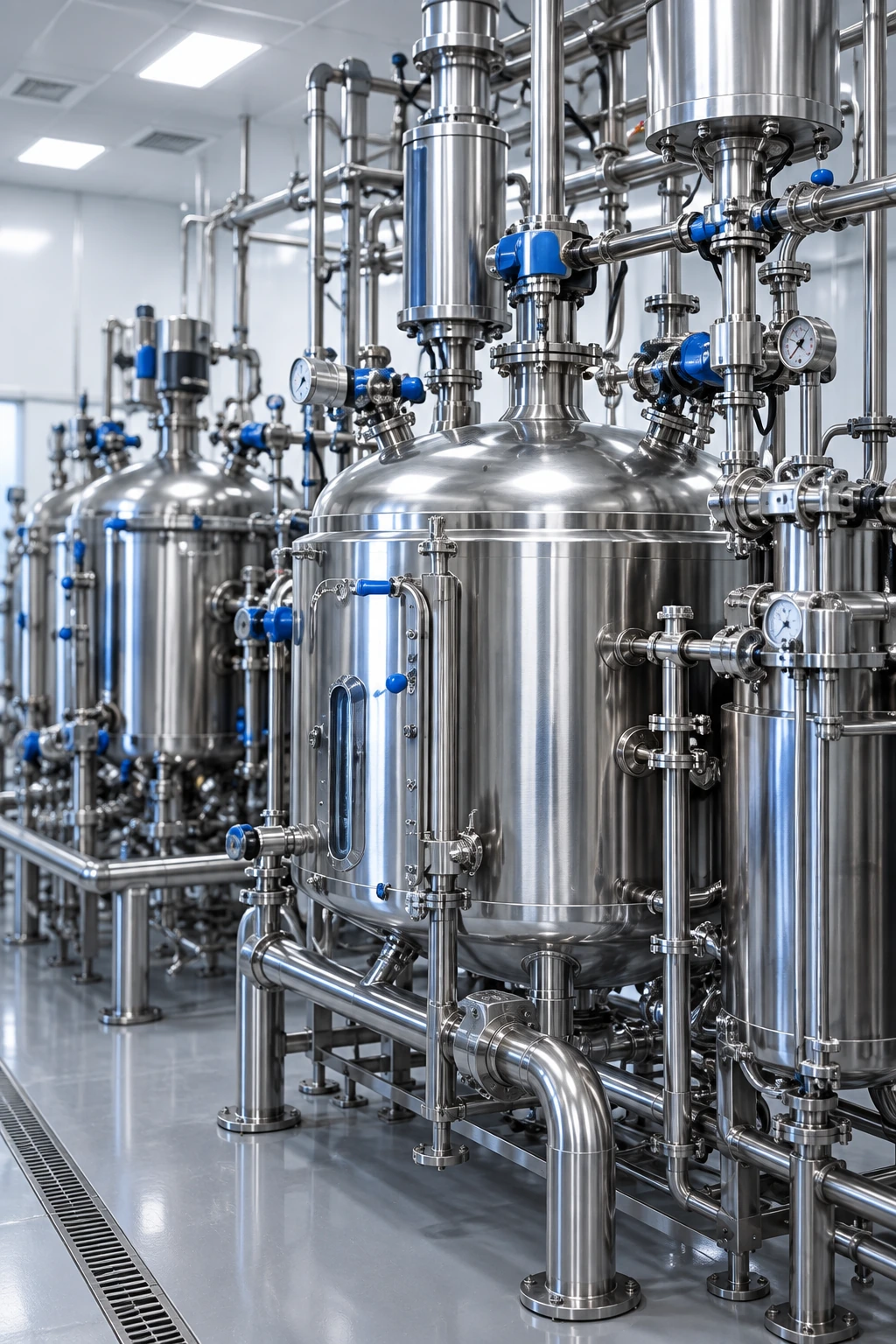
Process ovens and drying cabinets treat products with a defined temperature and airflow. The loading and service door remains closed during the process.
The seal works in a channel at a door-to-frame joint where suitable temperature conditions are provided. The oven process temperature and the actual temperature at the seal are assessed separately.
Benefits of the seal
Perimeter contact. Helps limit unwanted air passage through the door joint.
Service access. Venting retracts the profile to release the door movement.
Geometry-specific selection. Thermal expansion and the closed gap inform the profile and holder design.
Our manufacturing solution
We manufacture custom inflatable seals for this type of equipment. We assess the section, closed-loop dimensions, corner radii and air inlet arrangement against your drawing, and select the material for the temperature, product contact and cleaning conditions.
Selection and installation details
Provide continuous and short-term temperatures at the seal.
Assess thermal expansion, insulation clearance and mating surfaces around the perimeter.
Protect the air inlet and tubing from hot surfaces.
Images are representative application designs, not photographs of customer installations. The final profile, material and operating values are established during project review.
PREPARING YOUR PROJECT
What information is needed for selection?
Technical drawings and photographs of the existing installation help us assess the profile and connection options together. Include the following information with your enquiry.
Application-specific selection information
Information to provide
Assessment details
Actual seal temperature
Continuous and short-duration temperatures at the seal groove, plus heating and cooling times.
Thermal expansion
Closed gap when cold and hot, door stiffness and mating surface movement.
Insulation and layout
Distance from the hot zone, groove and retainer section, valve and air line position.
Process and maintenance
Internal environment, cleaning conditions, cycle frequency and accessible inspection points.
Frequently asked questions
Is the oven temperature enough to select the seal?
The oven interior and the seal may experience different temperatures. Values at the seal location must be established with insulation and installation layout taken into account.
Is there one standard temperature limit?
Limits depend on the compound, profile, exposure duration and mechanical conditions. One value cannot be applied to every installation without reviewing the project.
Can the door open while hot?
The opening sequence follows the equipment's operating instructions. Seal exhaust, process conditions and the locking system are considered as part of that sequence.
Catalogue & technical resources
Explore the related catalogue and review profile and installation options alongside your application drawing.


 Enlarge image ↗